
Who are Liquidity Services' core customers among institutional sellers and professional buyers?
Liquidity Services serves large institutional sellers – corporates and governments – plus professional, value-focused buyers. This matters because network effects drive recovery value; in 2025 the firm shifted to high-margin self-service tech, boosting seller retention and bid density.
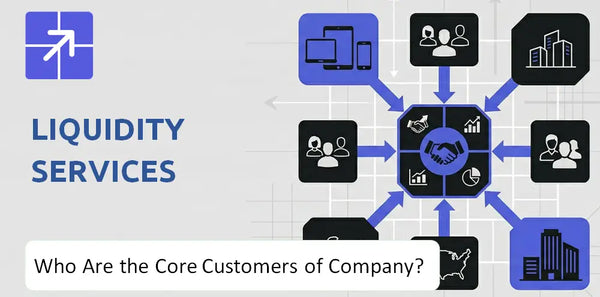
Focus on institutional surplus managers and repeat professional buyers; they fuel scale and pricing. See product insights in Liquidity Services BCG Matrix Analysis.
Who Is Liquidity Services Trying to Win?
Liquidity Services tries to win large institutional sellers and high-frequency commercial buyers: Fortune 1000 retailers and manufacturers plus over 16,000 government agencies on the sell-side, and a global pool of more than 5.3 million registered buyers on the buy-side.
 Main Customer Group: Institutional Sellers
Fortune 1000 retailers, manufacturers, and large public-sector entities (including the US Department of Defense) are the primary liquidity services target customers because they supply high-volume surplus, returns, and end-of-life assets requiring compliant, transparent disposition.
Secondary Customer Groups: Commercial Buyers
Professional refurbishers, small business owners, discount retailers, international wholesalers, auto recyclers, and salvage buyers form the core customers of liquidity services company on the buy-side, providing the velocity needed to clear large lots.
Customer Type and Market Role
Liquidity Services serves a mixed base: institutional and government surplus asset sellers plus business-to-business buyers (asset remarketing buyers, resellers sourcing inventory from liquidity marketplaces), emphasizing commercial over individual consumers.
Most Important Segment by Scale
The most important segment is large institutional sellers (corporate and government) because they deliver scale – high-value lots and recurring volumes – which drive platform GMV and buyer engagement; institutional supply underpinned ~$400 million in reported GMV-related activity in recent fiscal disclosures (2025 trends reflected in platform metrics).
For organizational positioning and cultural context see Mission, Vision, and Values of Liquidity Services Company
Liquidity Services SWOT Analysis
- Complete SWOT Breakdown
- Fully Customizable
- Editable in Excel & Word
- Professional Formatting
- Investor-Ready Format

What Do Liquidity Services's Customers Care About Most?
Sellers want fast recovery and lower risk; buyers want transparency and reliable value. In 2025 fiscal conditions of inventory volatility, core customers prioritize maximizing cents on the dollar while meeting environmental and data-security rules, and buyers seek accurate descriptions and low-cost capital inventory to protect margins.

Recovery velocity and risk mitigation
Liquidity services target customers – especially surplus asset sellers such as manufacturers and government agencies selling surplus through liquidity services – care most about speed of disposition and minimizing loss. In 2025, sellers demand solutions that convert idle inventory into cash quickly while protecting brand, meeting data security rules for IT asset disposition buyers for refurbished equipment, and reducing holding costs.
Practical buying drivers: transparency and accurate valuation
Asset remarketing buyers and industrial asset buyers select platforms that provide detailed photography, accurate asset descriptions, and valuation tools. These features reduce post-purchase returns and help resellers sourcing inventory from liquidity marketplaces and retail buyers buying returned and overstock inventory assess risk amid 2025 inflation pressures on small business margins.
Emotional or aspirational appeal: ESG credibility
Corporate sellers and asset managers seeking corporate remarketing solutions increasingly look for landfill diversion and Scope 3 emissions data for ESG reporting. Demonstrable landfill diversion metrics give procurement and sustainability teams confidence and reputational upside when outsourcing surplus asset disposition services.
What customers value most: documented outcomes
Core customers of liquidity services company value verifiable outcomes: documented landfill diversion rates, chain-of-custody for data sanitation, and cents-on-the-dollar recovery. Public-sector sellers and hospitality and healthcare buyers of surplus furniture and equipment require audited metrics for compliance and internal controls.
Loyalty or repeat demand: predictable liquidity
Repeat sellers and auction buyers for corporate and government surplus return when platforms deliver predictable timing, consistent recovery rates, and clean regulatory compliance. In 2025, retention correlates with shorter time-to-sale and documented savings on disposal costs – two clear drivers for ongoing engagement.
Why customers choose this company
Customers choose Liquidity Services for scalable auction reach and tools that improve price discovery for wholesale distributors sourcing liquidated goods and auto recyclers and salvage buyers on liquidity platforms. See the Growth Outlook of Liquidity Services Company for context on platform scale and 2025 performance.
Liquidity Services Business Model Canvas
- One-time Payment
- No Research Needed – Save Hours of Work
- Built by Experts, Trusted by Consultants
- Instant Download, Ready to Use
- 100% Editable, Fully Customizable

Where Is Demand Strongest for Liquidity Services?
Demand is strongest in North American municipal and retail sectors, led by recurring government fleet and heavy-equipment turnover and high-volume retail returns; international demand is growing in Southeast Asia and Europe.
Primary Market: North American Municipal and Retail Sectors
Municipal auctions and GovDeals drive steady demand as government agencies selling surplus through liquidity services replace fleets and heavy equipment on predictable cycles; this segment accounted for roughly ~40 percent of platform transaction value in 2025.
Secondary Markets: International and Private Retail Supply Chain
Southeast Asia and Europe are scaling buyer participation for used American industrial machinery and medical equipment; retailers and resale channels in North America see record volumes from e-commerce returns, which still average 15 – 20 percent of sales and drive significant inventory flow to asset remarketing buyers.
Where Liquidity Services Company Is Strongest
GovDeals remains the powerhouse within Liquidity Services Company by reach and revenue mix, delivering consistent supply and buyer engagement; the platform captured a majority of government-related GMV in 2025 and underpins strong recurring marketplace liquidity.
Fastest-Growing Demand Areas (2025 – 2026)
AllSurplus consolidated categories into one marketplace and posted a 12 percent year-over-year increase in GMV heading into 2026, reflecting surging buyer interest from emerging markets and wholesalers seeking liquidation pallets, retail returns, and industrial asset buys.
Growth hotspots include resellers sourcing inventory from liquidity marketplaces, hospital and healthcare buyers of surplus equipment, and cross-border industrial asset buyers; see further context in Ownership and Control of Liquidity Services Company
Liquidity Services Marketing Mix
- Complete Marketing Mix Analysis
- Effortlessly Communicate Your Business Strategy
- Investor-Ready Format
- 100% Editable and Customizable
- Clear and Structured Layout

How Does Liquidity Services Keep Its Audience Growing?
Liquidity Services grows its audience by expanding direct-seller listings through an LSI self-service model, integrating AI pricing and mobile bidding, and acquiring niche marketplaces to add specialized buyer segments while keeping retention high via repeat-purchase economics.
Expanding Reach into Adjacent Segments
Liquidity Services broadens its audience by lowering seller friction with the LSI self-service listing flow, enabling surplus asset sellers and government agencies selling surplus through liquidity services to list directly. Strategic acquisitions of niche marketplaces bring industrial asset buyers, auto recyclers, and hospitality and healthcare buyers into the ecosystem, increasing addressable users and cross-selling opportunities.
Customer Retention Drivers
Repeat buyers accounted for over 75 percent of total GMV in recent quarters, driven by reliable inventory flow, AI-driven predictive pricing that reduces time-to-sale, and improved mobile bidding experiences. High retention is supported by transparent fees, seller tools that reduce transaction costs, and contractual relationships with large asset managers and corporate sellers.
Loyalty, Repeat Demand, and Customer Depth
Repeat demand and ecosystem stickiness come from integrated workflows for surplus management, buyer segmentation (resellers, wholesale distributors, retail liquidators), and analytics dashboards that surface relevant lots. Loyalty is reinforced as buyers sourcing inventory from liquidity marketplaces see predictability in lot quality and pricing, increasing purchase frequency and lifetime value.
Strongest Growth Lever in 2025/2026
The single strongest lever is combining the LSI self-service model with AI pricing: it accelerates listings, lowers seller costs, and fuels the fly-wheel of new inventory that attracts auction buyers for corporate and government surplus. Analysts project Liquidity Services to capture share of the $650 billion global reverse logistics market, supporting projected GMV growth in the high single digits as more organizations formalize surplus disposition.
Competitive Landscape of Liquidity Services Company
Liquidity Services Boston Consulting Group Matrix
- Built by Experts, Trusted by Consultants
- Structured for Consultants, Students, and Founders
- 100% Editable in Microsoft Word & Excel
- Instant Digital Download – Use Immediately
- Compatible with Mac & PC – Fully Unlocked

Related Blogs
- What Is the History of Liquidity Services Company and How Did It Evolve?
- What Is the Competitive Landscape of Liquidity Services Company and How Does It Compete?
- What Is the Growth Outlook of Liquidity Services Company and Where Is It Heading?
- How Does Liquidity Services Company Work and What Drives Its Business Model?
- How Does Liquidity Services Company Reach Customers and Turn Demand into Sales?
- What Do the Mission, Vision, and Core Values of Liquidity Services Company Reveal?
- Who Owns Liquidity Services Company Today and Who Holds Control?
Frequently Asked Questions
Liquidity Services serves two main groups: large institutional sellers and high-frequency commercial buyers. On the sell-side, that includes Fortune 1000 retailers, manufacturers, and government agencies. On the buy-side, it includes refurbishers, small business owners, discount retailers, wholesalers, auto recyclers, and salvage buyers who help clear large lots.
Disclaimer
All information, articles, and product details provided on this website are for general informational and educational purposes only. We do not claim any ownership over, nor do we intend to infringe upon, any trademarks, copyrights, logos, brand names, or other intellectual property mentioned or depicted on this site. Such intellectual property remains the property of its respective owners, and any references here are made solely for identification or informational purposes, without implying any affiliation, endorsement, or partnership.
We make no representations or warranties, express or implied, regarding the accuracy, completeness, or suitability of any content or products presented. Nothing on this website should be construed as legal, tax, investment, financial, medical, or other professional advice. In addition, no part of this site - including articles or product references - constitutes a solicitation, recommendation, endorsement, advertisement, or offer to buy or sell any securities, franchises, or other financial instruments, particularly in jurisdictions where such activity would be unlawful.
All content is of a general nature and may not address the specific circumstances of any individual or entity. It is not a substitute for professional advice or services. Any actions you take based on the information provided here are strictly at your own risk. You accept full responsibility for any decisions or outcomes arising from your use of this website and agree to release us from any liability in connection with your use of, or reliance upon, the content or products found herein.