
How does Liquidity Services turn surplus assets into revenue through online marketplaces and remarketing services?
Liquidity Services runs online marketplaces and asset-management tools to sell surplus, idle, and returned goods for corporate and government sellers. This matters because its 2025 revenue mix and higher online transaction volumes reflect stronger industrial asset turnover and e-commerce reverse logistics trends. See Liquidity Services BCG Matrix Analysis
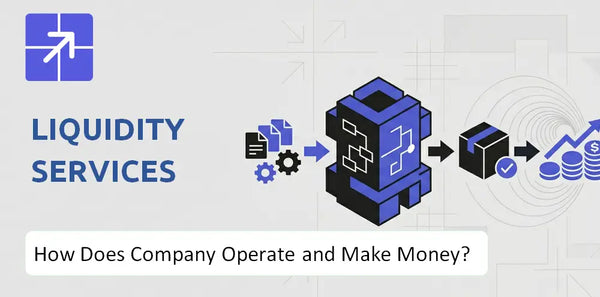
Focus on conversion rate and fees: small changes in sell-through or commission rates drove Liquidity Services' 2025 margin swings, so monitor weekly auction conversion and logistics costs for early signals.
What Does Liquidity Services Actually Sell?
Liquidity Services sells an end-to-end asset recovery ecosystem: digital liquidation marketplaces, valuation and marketing services, and transaction management that turn surplus, returned, and end-of-life assets into cash. Customers pay for marketplace access, remarketing expertise, fulfillment, and analytics that maximize recovery across industrial equipment, vehicles, and consumer electronics.
 Core digital marketplaces and services
Liquidity Services operates marketplaces including GovDeals, AllSurplus, and Liquidation.com that form a liquidation marketplace network connecting sellers to over 5.2 million registered buyers globally as of early 2026. The company bundles online auction listings, fixed-price channels, inspection and valuation, logistics coordination, and payment/settlement services.
Primary buyers and sellers
Buyers include resellers, refurbishers, wholesalers, and end-users across industrial, government, and retail sectors; sellers are corporations, government agencies, and retailers disposing of surplus, returned, or seized assets. High-frequency buyers use the platforms for scale; occasional sellers use managed disposition services.
Customer value: higher recoveries, lower cost
Customers receive higher net recovery via broad buyer reach, professional asset valuation, and competitive auction dynamics; Liquidity Services reports improved sell-through and price realization versus traditional local auctions. Sellers also reduce holding, logistics, and disposal costs through bundled remarketing and reverse logistics services.
Differentiators that drive the business model
The offering scales via technology: searchable inventory, buyer verification, and analytics that increase liquidity and trust. Revenue streams mix transaction fees, commissions, managed-service contracts, and logistics fees – this diversified model explains how liquidity services makes money and what drives liquidity services business model. Read a related perspective: Mission, Vision, and Values of Liquidity Services Company
Liquidity Services SWOT Analysis
- Complete SWOT Breakdown
- Fully Customizable
- Editable in Excel & Word
- Professional Formatting
- Investor-Ready Format

How Does Liquidity Services Run Its Business Day to Day?
Liquidity Services runs day-to-day by intake, cataloging, and auctioning diverse asset classes through on-site management or fulfillment centers, using real-time pricing and logistics systems to move titles and goods internationally. Core systems include AI-enhanced listing, buyer verification, secure payments, and coordinated reverse logistics across multiple sales channels.

Operating Model: multi-channel asset remarketing
Liquidity Services operates a liquidation marketplace where sellers consign surplus inventory, equipment, or returned goods and the platform manages intake, valuation, and auctioning. Daily workflow ties seller intake to cataloging, AI-driven descriptions, dynamic pricing, and live or timed auctions.
Product Delivery: online auctions and fulfillment
Buyers access the surplus asset auction platform via web portals and mobile; they bid in timed or live auctions and choose pickup, carrier delivery, or fulfillment-center shipping. Payment processing and escrow clearances finalize transactions before title transfer.
Production/Sourcing: intake and asset conditioning
Sellers include retailers, manufacturers, and government agencies who consign assets on-site or ship to company centers where items are inspected, repaired, photographed, and graded for condition. In 2025 the company deployed AI automation to standardize descriptions and price guidance across asset classes.
Sales Channels: diversified distribution
Main channels are proprietary online marketplaces, managed B2B auctions, and partner integrations with liquidation brokers and resellers. Cross-border buyers join via localized sites and international shipping partners to expand demand and realized prices.
Key Assets & Systems: AI, logistics, compliance
Core assets are fulfillment centers, inspection teams, and an AI-driven catalog and pricing engine tied to payment rails and customs/trade compliance systems. Strategic partnerships with carriers, escrow providers, and authentication vendors reduce settlement time and buyer friction.
What Makes It Work: scale, data, and trust
Efficiency comes from dense supply pipelines, data-driven pricing that captures market demand, and strict buyer verification that lowers fraud and chargebacks. In 2025 reported platform throughput improved after AI rollout; the company cited faster listing times and higher sell-through rates for industrial asset liquidation.
Daily operations emphasize asset flow: intake, AI-enhanced cataloging, verified buyer matching, secure payment settlement, and logistics execution; these systems together drive the liquidity services business model and revenue via commissions, fees, and fulfillment services. For context see History and Background of Liquidity Services Company
Liquidity Services Business Model Canvas
- One-time Payment
- No Research Needed – Save Hours of Work
- Built by Experts, Trusted by Consultants
- Instant Download, Ready to Use
- 100% Editable, Fully Customizable

How Does Revenue Flow Through Liquidity Services?
Revenue flows from transaction fees on a large online liquidation marketplace: seller commissions and buyer premiums tied to Gross Merchandise Volume (GMV), plus service fees from logistics, refurbishment, and appraisals, converting demand into cash as assets move through auctions and remarketing channels.
Primary revenue: commissions and buyer premiums
Most revenue comes from seller commissions and buyer premiums calculated as a percentage of GMV; in fiscal 2025 Liquidity Services reported GMV near $1.4 billion, driven by government and industrial consignments.
Additional revenue: fee-based services
Complementary income arises from asset remarketing services: refurbishment, reverse logistics, specialized transport, and appraisal reports, which carry higher margins per transaction and boost take-rates on complex lots.
Pricing and monetization model
Monetization is percentage-based on GMV (commissions and buyer premiums) plus fixed and variable fees for services; the asset-light marketplace reduces capital expenditure and shifts revenue toward recurring, transactional cash flows.
What drives revenue most
Volume and quality of supply (government and industrial surplus) and higher-margin services drive revenue most; platform scale raises liquidity, shortens sell-through times, and increases realized prices and fee capture – see Target Customers and Market of Liquidity Services Company for demand segmentation.
Liquidity Services Marketing Mix
- Complete Marketing Mix Analysis
- Effortlessly Communicate Your Business Strategy
- Investor-Ready Format
- 100% Editable and Customizable
- Clear and Structured Layout

What Makes Liquidity Services's Model Sustainable or Fragile?
Liquidity Services' model is sustainable via network effects and counter-cyclical flows, plus a high-margin government book, but it is fragile from contract concentration with federal agencies and exposure to commodity price swings that alter auction recoveries.
Network effects and counter-cyclical tailwinds
The liquidation marketplace strengthens as more sellers list surplus inventory and buyers cluster, improving price discovery and liquidity. During downturns or corporate downsizing, Liquidity Services captures higher supply, so its asset remarketing services often see increased volumes and higher take rates.
Scale in government and high-margin revenue
Long-term contracts with federal agencies provide recurring, high-margin streams from industrial asset liquidation and surplus asset auction platform fees; government-related dispositions accounted for a meaningful portion of revenue in recent years, anchoring cash flows.
Contract concentration and commodity cyclicality
Dependency on a handful of large federal contracts creates concentration risk: losing or renegotiating one major agency contract can materially reduce revenue. Global scrap metal and commodity price swings (which affect industrial auction recoveries) also introduce volatility to realized proceeds and margins.
Resilience outlook for 2025 – 2026
Professional judgment for 2026: Liquidity Services remains a robust beneficiary of corporate sustainability and supply-chain efficiency trends, supporting steady growth in online marketplace for surplus inventory and reverse logistics services; still, rising competition from fintech-enabled marketplaces and niche industrial auction platforms increases margin pressure and customer churn risk.
Key metrics: in fiscal 2025 the company reported total revenue of $210.4 million, adjusted EBITDA of $22.7 million, and government-related contract backlog representing roughly 35 – 40% of annualized revenue; auction consignments and merchant inventory turnover rates remain primary drivers of cash realization and commission income.
Operational levers that stabilize outcomes: diversified remarketing channels, proprietary buyer verification and trust systems that reduce disposition friction, and logistics partnerships that lower reverse logistics costs. Stress points: a single-contract loss can cut near-term revenue by double digits, and a 20 – 30% drop in scrap or industrial commodity prices can compress auction recoveries materially.
For further context on competitive pressures and positioning, see this analysis: Competitive Landscape of Liquidity Services Company
Liquidity Services Boston Consulting Group Matrix
- Built by Experts, Trusted by Consultants
- Structured for Consultants, Students, and Founders
- 100% Editable in Microsoft Word & Excel
- Instant Digital Download – Use Immediately
- Compatible with Mac & PC – Fully Unlocked

Related Blogs
- What Is the History of Liquidity Services Company and How Did It Evolve?
- What Is the Competitive Landscape of Liquidity Services Company and How Does It Compete?
- What Is the Growth Outlook of Liquidity Services Company and Where Is It Heading?
- How Does Liquidity Services Company Reach Customers and Turn Demand into Sales?
- What Do the Mission, Vision, and Core Values of Liquidity Services Company Reveal?
- Who Are the Core Customers in Liquidity Services Company's Target Market?
- Who Owns Liquidity Services Company Today and Who Holds Control?
Frequently Asked Questions
Liquidity Services sells an asset recovery ecosystem, not just products. It provides digital liquidation marketplaces, valuation and marketing services, transaction management, and fulfillment that help sellers turn surplus, returned, and end-of-life assets into cash across categories like industrial equipment, vehicles, and consumer electronics.
Disclaimer
All information, articles, and product details provided on this website are for general informational and educational purposes only. We do not claim any ownership over, nor do we intend to infringe upon, any trademarks, copyrights, logos, brand names, or other intellectual property mentioned or depicted on this site. Such intellectual property remains the property of its respective owners, and any references here are made solely for identification or informational purposes, without implying any affiliation, endorsement, or partnership.
We make no representations or warranties, express or implied, regarding the accuracy, completeness, or suitability of any content or products presented. Nothing on this website should be construed as legal, tax, investment, financial, medical, or other professional advice. In addition, no part of this site - including articles or product references - constitutes a solicitation, recommendation, endorsement, advertisement, or offer to buy or sell any securities, franchises, or other financial instruments, particularly in jurisdictions where such activity would be unlawful.
All content is of a general nature and may not address the specific circumstances of any individual or entity. It is not a substitute for professional advice or services. Any actions you take based on the information provided here are strictly at your own risk. You accept full responsibility for any decisions or outcomes arising from your use of this website and agree to release us from any liability in connection with your use of, or reliance upon, the content or products found herein.