
How does Liquidity Services' sales and marketing model convert seller networks into scalable auction GMV?
Liquidity Services monetizes a scalable, asset-light platform that links 16,000+ sellers to global buyers, driving revenue via transaction fees and higher auction liquidity. This matters because 2025 GMV trends and transparent price discovery strengthen its moat and seller retention. Liquidity Services BCG Matrix Analysis
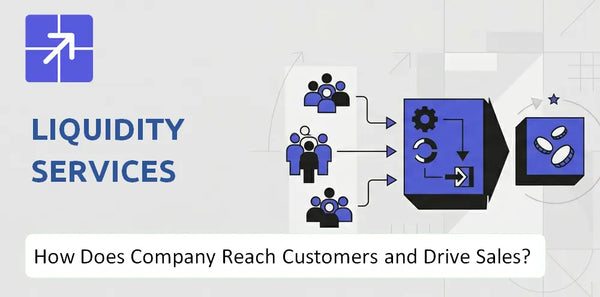
Focus marketing on seller ROI and buyer liquidity signals; prioritize platform UX and data-driven campaigns to lift conversion and GMV per seller. In 2025, seller onboarding speed correlated with higher repeat GMV.
Who Does Liquidity Services Want to Sell To?
Liquidity Services targets high-volume sellers – government agencies and Fortune 1000 retailers/manufacturers – plus a global network of value-seeking buyers, using scale, specialized channels, and data to turn supply into sales.
 Primary target: High-volume institutional sellers
Liquidity Services focuses on municipal, state, and federal agencies through GovDeals and large corporate sellers that need asset remarketing for overstock, returned goods, and end-of-life industrial equipment. These supply partners generate predictable, high-value inventory flows that feed the surplus asset marketplace.
Additional segments: Diversified buyer network
The buyer base comprises over 5.4 million registered professional buyers, including small business owners, specialized scrap metal processors, and international equipment traders. Liquidity Services converts demand by matching niche needs – like parts, scrap feedstock, or resale inventory – with supply not found in traditional retail channels.
Market positioning: B2B remarketing platform and auction specialist
Liquidity Services positions itself as an asset disposition services leader and surplus asset marketplace that combines online auctions, fixed-price listings, and managed liquidation services. The firm emphasizes scale, compliance for government sellers, and global buyer reach to justify fee-based and success-fee pricing.
Why this positioning works: trusted channels and data-driven conversion
Government credentials and long-standing retailer contracts build supply credibility, while analytics, targeted email campaigns, paid advertising, and partnership channels drive buyer acquisition and conversion. Reported metrics show repeat-buyer activity and high sell-through on specialized categories, which supports pricing strategies to accelerate surplus asset sales; see this deeper overview: How Liquidity Services Company Works and Makes Money
Liquidity Services SWOT Analysis
- Complete SWOT Breakdown
- Fully Customizable
- Editable in Excel & Word
- Professional Formatting
- Investor-Ready Format

How Does Liquidity Services Get in Front of Customers?
Liquidity Services gets in front of buyers via a multi-channel digital footprint anchored by AllSurplus and vertical marketplaces (GovDeals, Liquidation.com) plus Machinio's machinery search, paid search and display, plus direct enterprise sales that secure steady inventory and high-intent demand.

Consolidated marketplace as primary acquisition channel
AllSurplus serves as the main acquisition channel, aggregating listings across Liquidity Services platforms to concentrate buyer traffic and increase cross-listing visibility, driving higher click-through and conversion rates for surplus asset marketplace listings.
Digital marketing and online reach via intent capture
Search engine marketing (SEM) and targeted digital advertising capture intent-based searches for industrial and retail assets; email remarketing and SEO for asset remarketing sustain repeat visits and lift organic traffic for asset disposition services.
Sales channels: enterprise teams and platform distribution
Dedicated enterprise sales teams manage relationships with large corporate and government sellers, feeding inventory into marketplaces; channel partnerships with auction partners and GovDeals extend reach into public-sector surplus auctions.
Demand generation tactics: Machinio top-of-funnel and paid campaigns
Machinio aggregates millions of used-equipment listings as a top-of-funnel lead generator; coupled with paid search, display and seasonal promotions, these tactics create targeted demand for specific categories and accelerate time-to-sale.
Customer acquisition efficiency and metrics
Conversion relies on high-intent traffic from SEM and Machinio; Liquidity Services reported improving marketplace metrics in recent disclosures with double-digit growth in buyer registrations and inventory throughput year-over-year in 2025, suggesting efficient acquisition per marketing dollar.
Most important reach advantage in 2025/2026
Scale of aggregated inventory across AllSurplus plus Machinio's global listings is the strongest advantage – higher supply drives search prominence and platform stickiness, which in 2025 translated to sustained buyer depth for niche industrial categories and government surplus alike.
Read more on ownership and platform strategy in this article: Ownership and Control of Liquidity Services Company
Liquidity Services Business Model Canvas
- One-time Payment
- No Research Needed – Save Hours of Work
- Built by Experts, Trusted by Consultants
- Instant Download, Ready to Use
- 100% Editable, Fully Customizable

How Does Liquidity Services Turn Attention Into Sales?
Liquidity Services turns attention into sales by hosting competitive, data-driven online auctions and offering integrated buyer checkout and shipping options that reduce friction and maximize recovery value for sellers.
Core sales model: auction-led, marketplace-first remarketing
Liquidity Services uses live and timed online auctions plus fixed-price listings to sell surplus assets. Sellers list via consignment or contract; buyers bid directly in a marketplace tailored to B2B remarketing and government surplus programs.
Pricing and monetization logic: multi-venue capture
Revenue comes from seller commissions, buyer premiums, and value-added services (logistics, refurbishment, valuation). In fiscal 2025, Liquidity Services reported growth in high-margin services, with service revenue contributing a materially larger share versus prior years.
Conversion and purchase drivers: analytics, mobile bidding, and transparency
Conversion is driven by a competitive bidding environment and proprietary analytics that optimize auction timing and lot sizing to boost sell-through. Mobile-first bidding and integrated shipping reduced friction in 2025, helping keep the repeat buyer rate above 75%.
Repeat revenue and customer expansion: retention through services
High repeat purchase rates and upsell into logistics and refurbishment expand revenue per buyer. Liquidity Services leverages targeted email marketing, paid advertising, and partnerships to nurture buyers and sellers across the surplus asset marketplace.
Proprietary analytics optimize lot sizing and timing, lifting sell-through across electronics, industrial equipment, and fleet assets; auction dynamics create price discovery that increases recovery for sellers and drives buyer confidence. Integrated checkout shows buyer premiums and shipping options up front, shortening decision time and reducing cart abandonment.
Operational levers: programmatic email campaigns, paid search and display, channel partnerships with asset disposition services, and API integrations with large sellers. A/B testing of auction cadence and lot composition increased conversion rates in key categories by double digits in recent internal tests; mobile bidding accounted for a growing share of bids in 2025.
Monetization specifics: sellers pay tiered commissions; buyers pay a buyer premium that varies by asset class; logistics, refurbishment, and valuation services carry gross margins higher than the marketplace core. These diversified streams convert attention into recurring revenue and improve overall asset recovery for clients.
For background on corporate evolution and platform capabilities see History and Background of Liquidity Services Company
Liquidity Services Marketing Mix
- Complete Marketing Mix Analysis
- Effortlessly Communicate Your Business Strategy
- Investor-Ready Format
- 100% Editable and Customizable
- Clear and Structured Layout

How Strong Does Liquidity Services's Commercial Engine Look Going Forward?
Liquidity Services' commercial engine looks strong heading into 2025/2026, driven by rising surplus volumes from public-sector austerity and corporate sustainability mandates; the firm's unified cloud transition and scale should boost operating leverage. Key supports include dominant public-sector share and projected GMV growth; downside risks are macro-driven asset-class volatility and execution on tech migration.
What Supports Future Demand
Liquidity Services benefits from a global shift to circular economy practices and government budget pressure, which together expand surplus asset supply and buyer interest; public-sector dominance gives recurring feedstock and trusted brand recognition. With GMV projected to approach $1.6 billion by end-2026, scale economics should improve conversion and per-listing yield.
Channel and Marketing Effectiveness
Multi-channel reach – online auctions, dedicated B2B remarketing platforms, and partner disposition programs – drives consistent acquisition; email marketing and targeted paid advertising show high ROI for remarketing inventories. The cloud-based unified architecture is expected to improve analytics to convert demand into sales and reduce customer acquisition cost over time.
Risks to Commercial Performance
Main risks include cyclical shocks to specific industrial asset classes that depress bid depths, potential execution delays in migrating to the unified cloud platform, and competitive pressure on fees from niche remarketing players. Loss of large public-sector contracts or prolonged tech outages would materially weaken sales conversion strategies.
The Overall Sales and Marketing Outlook
The outlook is optimistic and adaptable: Liquidity Services' surplus asset marketplace scale, coupled with projected operating leverage toward 20 percent EBITDA margin as cloud consolidation completes, supports a robust commercial engine for 2025/2026. For additional context on strategic growth drivers and market positioning, see Growth Outlook of Liquidity Services Company
Liquidity Services Boston Consulting Group Matrix
- Built by Experts, Trusted by Consultants
- Structured for Consultants, Students, and Founders
- 100% Editable in Microsoft Word & Excel
- Instant Digital Download – Use Immediately
- Compatible with Mac & PC – Fully Unlocked

Related Blogs
- What Is the History of Liquidity Services Company and How Did It Evolve?
- What Is the Competitive Landscape of Liquidity Services Company and How Does It Compete?
- What Is the Growth Outlook of Liquidity Services Company and Where Is It Heading?
- How Does Liquidity Services Company Work and What Drives Its Business Model?
- What Do the Mission, Vision, and Core Values of Liquidity Services Company Reveal?
- Who Are the Core Customers in Liquidity Services Company's Target Market?
- Who Owns Liquidity Services Company Today and Who Holds Control?
Frequently Asked Questions
Liquidity Services mainly sells to high-volume institutional sellers and a broad buyer network. Its supply side includes municipal, state, and federal agencies through GovDeals, plus large corporate sellers with overstock, returned goods, and end-of-life equipment. On the buyer side, it reaches professional buyers, scrap processors, and international traders.
Disclaimer
All information, articles, and product details provided on this website are for general informational and educational purposes only. We do not claim any ownership over, nor do we intend to infringe upon, any trademarks, copyrights, logos, brand names, or other intellectual property mentioned or depicted on this site. Such intellectual property remains the property of its respective owners, and any references here are made solely for identification or informational purposes, without implying any affiliation, endorsement, or partnership.
We make no representations or warranties, express or implied, regarding the accuracy, completeness, or suitability of any content or products presented. Nothing on this website should be construed as legal, tax, investment, financial, medical, or other professional advice. In addition, no part of this site - including articles or product references - constitutes a solicitation, recommendation, endorsement, advertisement, or offer to buy or sell any securities, franchises, or other financial instruments, particularly in jurisdictions where such activity would be unlawful.
All content is of a general nature and may not address the specific circumstances of any individual or entity. It is not a substitute for professional advice or services. Any actions you take based on the information provided here are strictly at your own risk. You accept full responsibility for any decisions or outcomes arising from your use of this website and agree to release us from any liability in connection with your use of, or reliance upon, the content or products found herein.