
How does Essential Utilities, Inc. convert regulated rate-base investments into steady cash flow and returns?
Essential Utilities, Inc. runs water and wastewater networks under state-approved monopolies, earning returns via rate cases rather than market share. This matters because its 2025 capital spending of $1.1B and ongoing state filings drive near-term earnings and long-term rate base growth.
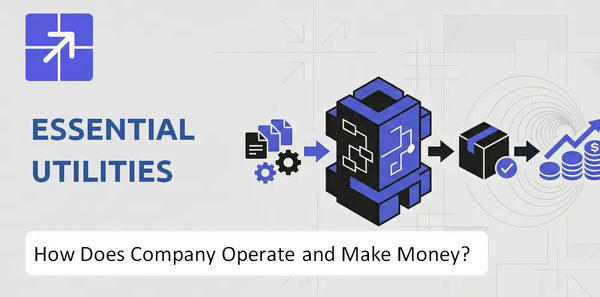
Focus on execution: timely project delivery and favorable 2025/2026 regulatory outcomes compress risk and lift allowed ROE. See strategic context in Essential Utilities BCG Matrix Analysis.
What Does Essential Utilities Actually Sell?
Essential Utilities, Inc. sells three life-sustaining services: potable water, wastewater treatment, and natural gas distribution. Customers pay for guaranteed availability, safety, and reliable delivery infrastructure rather than the commodity alone.
 Core services sold
Essential Utilities company delivers potable water and wastewater services under the Aqua brand to about 5.5 million people in eight states, and natural gas distribution under the Peoples brand to roughly 750,000 customers in Pennsylvania, Kentucky, and West Virginia.
Main buyers
Buyers are residential households, municipal and commercial customers, and small industrial users who require dependable water, wastewater, and heating gas service across Essential Utilities service areas and coverage map.
Customer value
Customers receive reliable service backed by regulated quality standards, predictable billing structures, and infrastructure maintenance practices that prioritize uninterrupted supply and public health compliance.
Why it stands out
How Essential Utilities works centers on regulated monopoly positions, recurring revenue streams, and capital expenditure plans for network resilience – making service purchase simple, essential, and less price-elastic than other sectors; see the company's History and Background of Essential Utilities Company for context.
Essential Utilities SWOT Analysis
- Complete SWOT Breakdown
- Fully Customizable
- Editable in Excel & Word
- Professional Formatting
- Investor-Ready Format

How Does Essential Utilities Run Its Business Day to Day?
Daily operations at Essential Utilities, Inc. center on running and upgrading a large utility network across 10 states, coordinating field crews, centralized back-office functions, and regulatory reporting to deliver water, wastewater, and natural gas reliably. The operating model prioritizes capital programs, leak and loss reduction, meter-to-cash systems, and compliance workflows to keep service flowing and rates justified.

Operating Model: capex-led regulated utility
Essential Utilities company runs as a regulated, capex-first operator: daily work schedules, asset inspections, permit management, and regulatory filings support a multi-year capital improvement plan. Centralized finance, legal, and engineering lower overhead while field teams execute replacements and emergency response.
Product and Service Delivery: billed utility services
Customers access water, wastewater, and natural gas via metered connections; billing runs on monthly cycles through a centralized meter-to-cash platform. Customer service centers handle outage reporting, new connections, and payment plans tied to state-approved rate schedules.
Production, Sourcing, Development: infrastructure replacement
Day-to-day production is infrastructure work: replacing pipes, upgrading treatment plants, and deploying leak-detection tech. In 2025 and 2026 the company plans to spend roughly 1.3 billion to 1.4 billion annually on capital projects to replace aging mains and meet tighter environmental standards.
Sales Channels and Distribution: regulated local delivery
Distribution is geographic and utility-regulated: local service territories deliver product via physical networks of >15,000 miles of water mains and >18,000 miles of natural gas pipes, while commercial and municipal contracts sit alongside residential billing as core revenue streams.
Key Assets, Systems, and Partnerships: scale and shared services
Key assets are pipe networks, treatment plants, and SCADA/OMS systems; scale across 10 states enables shared IT, procurement, and finance. Partnerships include contractors for mains work, state utility commissions for rate cases, and technology vendors for leak detection and meter telemetry.
What Makes the Model Work: regulatory recovery and operational metrics
The model relies on regulatory cost recovery – rate cases allow capital and operating costs to be reflected in customer rates – plus operational focus on reducing non-revenue water and gas leak rates to protect margins. Scale lowers per-customer fixed costs, and disciplined capex execution supports long-term revenue and reliability.
Essential day-to-day KPIs include miles of mains replaced, non-revenue water percentage, leak repair times, customer call response time, and capital spend run-rate; these feed monthly operational reviews and annual rate case filings. For related commercial and outreach practices see Sales and Marketing Strategy of Essential Utilities Company
Essential Utilities Business Model Canvas
- One-time Payment
- No Research Needed – Save Hours of Work
- Built by Experts, Trusted by Consultants
- Instant Download, Ready to Use
- 100% Editable, Fully Customizable

How Does Revenue Flow Through Essential Utilities?
Revenue at Essential Utilities, Inc. flows from regulated customer rates for water, wastewater, and natural gas distribution; demand is price-inelastic so volumes convert reliably into cash once rates are approved. The company recovers operating costs and earns returns by growing its regulated rate base through capital investments and state rate cases.
Main revenue comes from regulated customer rates
Essential Utilities company earns most revenue by billing customers for water, wastewater, and gas delivery under state-approved tariffs; regulators permit a cost-plus return on the company's rate base. This regulated structure makes Essential Utilities business model predictable and supports steady cash flow.
Additional revenue from ancillary services and non-rate charges
Secondary streams include meter charges, connection fees, service line maintenance contracts, and limited wholesale water sales; these add-ons smooth revenue timing and slightly boost margins. Some districts provide wastewater treatment services billed separately, diversifying Essential Utilities revenue streams.
Pricing via regulator-approved cost-plus rate setting
How Essential Utilities works: it files rate cases with state public utility commissions to recover operating expenses, depreciation, taxes, and earn a return on its invested capital (rate base). Rate relief typically targets recovery of capital expenditures, with revenue changes effective after regulatory approval.
What drives revenue most: rate base growth and regulatory approvals
Revenue scales with capital investment: Essential Utilities, Inc. targets 8 percent to 10 percent compound annual rate base growth through early 2026 plans, so approved infrastructure upgrades directly expand authorized earnings. Demand's price-inelasticity and multiyear rate cases make cash flow stable and support the dividend policy; regulatory denial or delayed rate relief is the core downside risk.
For background on corporate priorities and stakeholder commitments, see Mission, Vision, and Values of Essential Utilities Company.
Essential Utilities Marketing Mix
- Complete Marketing Mix Analysis
- Effortlessly Communicate Your Business Strategy
- Investor-Ready Format
- 100% Editable and Customizable
- Clear and Structured Layout

What Makes Essential Utilities's Model Sustainable or Fragile?
Essential Utilities company combines non-discretionary water and gas services with steady regulatory-backed cash flows, but it is exposed to regulatory lag, interest-rate sensitivity, and rising PFAS remediation costs that can strain capital recovery and margins.
Core structural advantage: essential, regulated monopoly-like services
Essential Utilities business model rests on predictable demand for water and gas; customer bills are non-discretionary, producing stable revenue streams and enabling 7 to 9 percent projected EPS growth through 2026 under management guidance.
Key assets and capabilities: dual-commodity scale and disciplined acquisitions
How Essential Utilities works: it owns a mix of regulated water, wastewater, and natural gas utilities, plus municipal system acquisitions that add customers and rate base; scale and regulatory expertise lower per-unit operating and financing costs.
Dependencies and constraints: regulation, capital intensity, and interest rates
Essential Utilities operations and services depend on timely rate-case approvals to recover capital; regulatory lag – delays between spending and rate recovery – creates cash-flow timing risk, while heavy debt raises sensitivity to higher interest rates and increases financing costs.
Durability in 2025/2026: resilient but susceptible to environmental capex shocks
In 2025 and into 2026 the model appears highly resilient due to essential service demand and disciplined municipal acquisitions, yet PFAS remediation in the water segment is a primary vulnerability requiring significant capital; earnings growth will hinge on regulatory approval efficiency for environmental costs. Read more on ownership and control: Ownership and Control of Essential Utilities Company
Essential Utilities Boston Consulting Group Matrix
- Built by Experts, Trusted by Consultants
- Structured for Consultants, Students, and Founders
- 100% Editable in Microsoft Word & Excel
- Instant Digital Download – Use Immediately
- Compatible with Mac & PC – Fully Unlocked

Related Blogs
- What Is the History of Essential Utilities Company and How Did It Evolve?
- What Is the Competitive Landscape of Essential Utilities Company and How Does It Compete?
- What Is the Growth Outlook of Essential Utilities Company and Where Is It Heading?
- How Does Essential Utilities Company Reach Customers and Turn Demand into Sales?
- What Do the Mission, Vision, and Core Values of Essential Utilities Company Reveal?
- Who Are the Core Customers in Essential Utilities Company's Target Market?
- Who Owns Essential Utilities Company Today and Who Holds Control?
Frequently Asked Questions
Essential Utilities sells potable water, wastewater treatment, and natural gas distribution. Customers pay for reliable delivery, safety, and regulated service infrastructure, not just the raw commodity. The company serves residential, municipal, commercial, and small industrial users across its service areas through the Aqua and Peoples brands.
Disclaimer
All information, articles, and product details provided on this website are for general informational and educational purposes only. We do not claim any ownership over, nor do we intend to infringe upon, any trademarks, copyrights, logos, brand names, or other intellectual property mentioned or depicted on this site. Such intellectual property remains the property of its respective owners, and any references here are made solely for identification or informational purposes, without implying any affiliation, endorsement, or partnership.
We make no representations or warranties, express or implied, regarding the accuracy, completeness, or suitability of any content or products presented. Nothing on this website should be construed as legal, tax, investment, financial, medical, or other professional advice. In addition, no part of this site - including articles or product references - constitutes a solicitation, recommendation, endorsement, advertisement, or offer to buy or sell any securities, franchises, or other financial instruments, particularly in jurisdictions where such activity would be unlawful.
All content is of a general nature and may not address the specific circumstances of any individual or entity. It is not a substitute for professional advice or services. Any actions you take based on the information provided here are strictly at your own risk. You accept full responsibility for any decisions or outcomes arising from your use of this website and agree to release us from any liability in connection with your use of, or reliance upon, the content or products found herein.